The Fashion Pact Roundtable on Sustainable Fashion in China Successfully Held in Shanghai
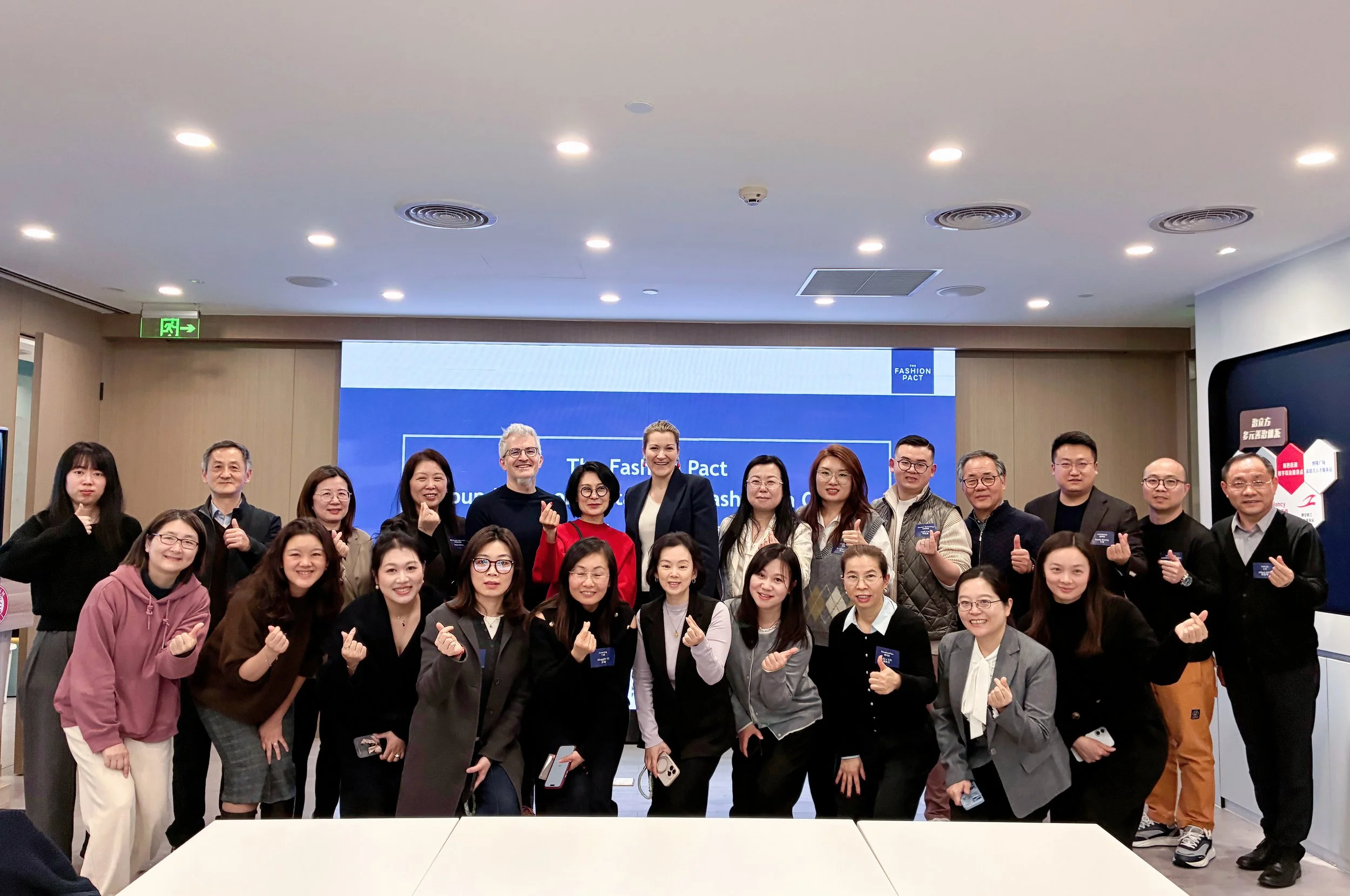
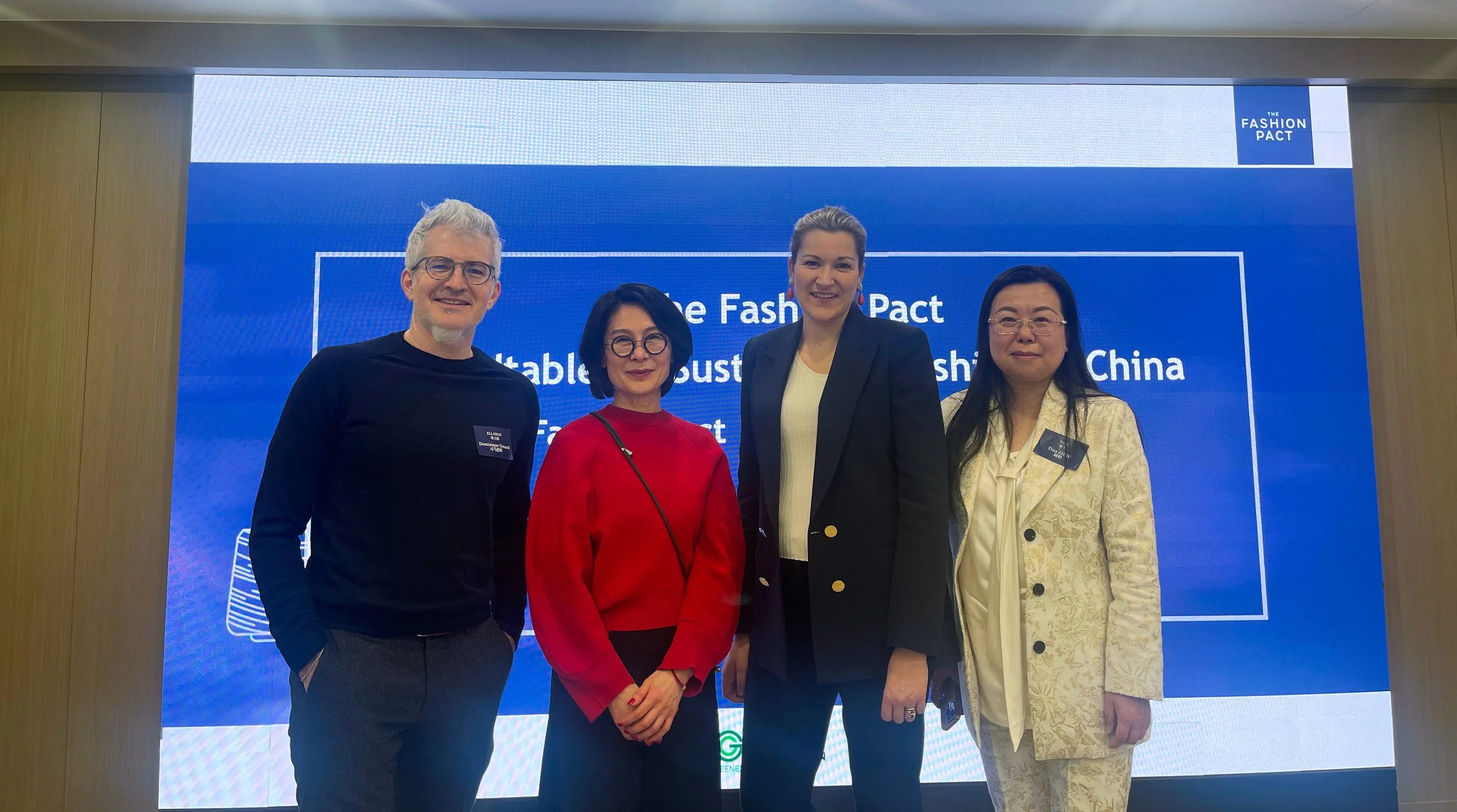
Hosted by GREENEXT and co-organized by Rethink Fashion and Yaoke Research Institute, the Fashion Pact Roundtable on Sustainable Fashion in China was successfully held at Plaza 66 in Shanghai with the support of the Nanjing West Road Subdistrict. As the world’s largest CEO-led sustainability initiative in the fashion sector, The Fashion Pact was represented in person by its Executive Director and Secretary General, Eva von Alvensleben, who joined senior executives from leading Chinese fashion brands and key supply chain companies for an in-depth closed-door dialogue. The roundtable provided a high-level platform for discussing sustainability pathways, international collaboration, and the evolving role of Chinese companies in the global fashion value chain.
The event brought together representatives from more than 20 companies across apparel, textiles, jewelry, and material innovation, including JNBY, ELLASSAY, ICICLE, SHOKAY, Lao Feng Xiang, Sinoteco, Lenzing, CONSINEE, GUJIN, SHOKAY, Sandriver, WENSLI, High Fashion, Kingdom, among others. The gathering marked an important opportunity for deeper engagement between The Fashion Pact and China’s fashion and supply chain communities, laying the groundwork for future collaboration.
From Global Frameworks to Local Action: Sustainability as Core Competitiveness
The event opened with welcoming remarks from Dr. Hong ZHENG, founder of GREENEXT, who noted that as global decarbonization accelerates and regulatory environments become increasingly stringent, sustainability is no longer simply a reputational “value-add.” Instead, it has become a strategic capability that shapes long-term competitiveness, global market access, and enterprise value creation. She emphasized that the salon was designed as a focused and high-quality dialogue platform, enabling Chinese companies to reassess their role within the global sustainability landscape and better identify emerging transformation opportunities.
Eva von Alvensleben then introduced The Fashion Pact’s mission and action framework. Launched in 2019 by French President Emmanuel Macron together with François-Henri Pinault, Chairman and CEO of Kering, The Fashion Pact has grown into the largest CEO-led sustainability coalition in the fashion industry. Today, the initiative brings together 60 member companies representing approximately one-third of the global fashion sector.
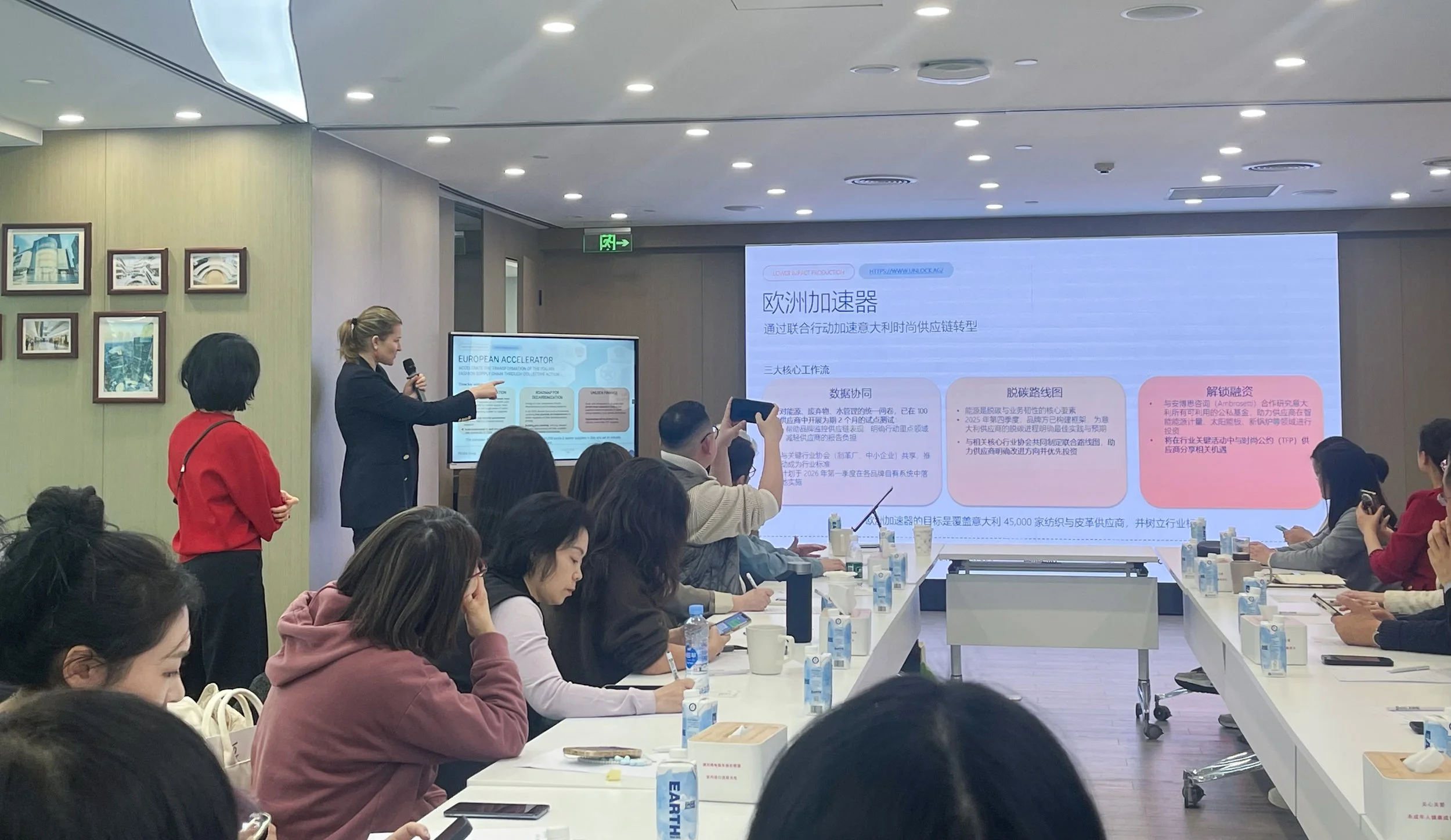
Through aligned target-setting, data-sharing mechanisms, and cross-industry knowledge exchange, The Fashion Pact seeks to drive systemic transformation across the fashion value chain. During her presentation, Alvensleben also highlighted China’s pivotal role within the global fashion supply chain, noting that Chinese companies demonstrate strong capabilities and significant potential in green manufacturing, material innovation, and large-scale industrial transformation—all of which are essential to advancing the industry’s broader sustainability transition.
She further emphasized that the challenges addressed under The Fashion Pact’s four focus areas—renewable energy, lower-impact materials, biodiversity, and lower-impact production—cannot be solved by any single company alone. Meaningful progress, she explained, requires deeper collaboration across the industry through resource sharing, collective learning, and coordinated action. International collaboration platforms such as The Fashion Pact not only provide companies with practical frameworks and shared expertise, but also empower businesses to strengthen compliance capabilities, enhance risk management, and build greater trust in global markets—ultimately reinforcing long-term competitiveness.

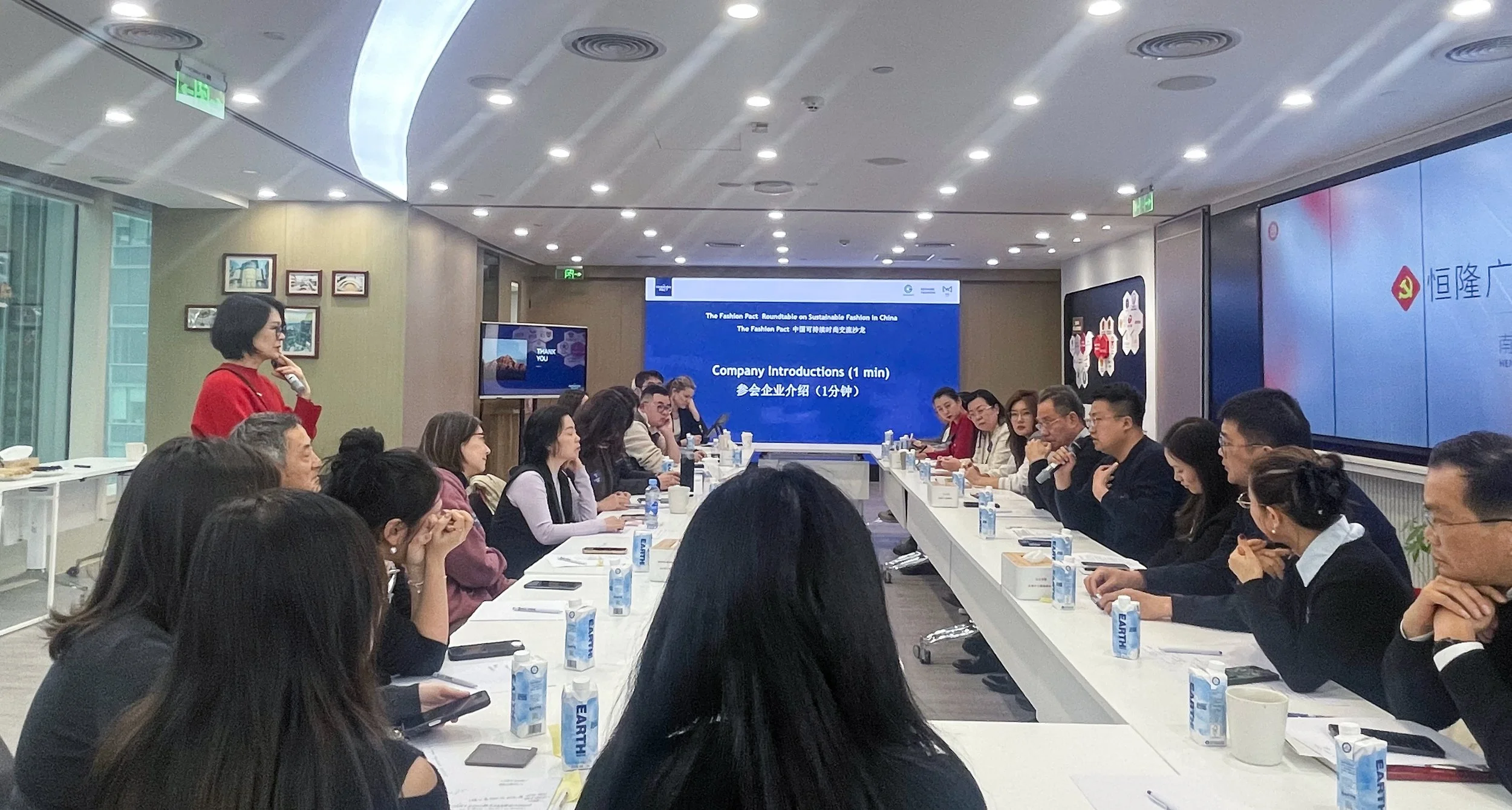
Addressing Shared Challenges: From Value Chain Decarbonization to Collaborative Mechanisms
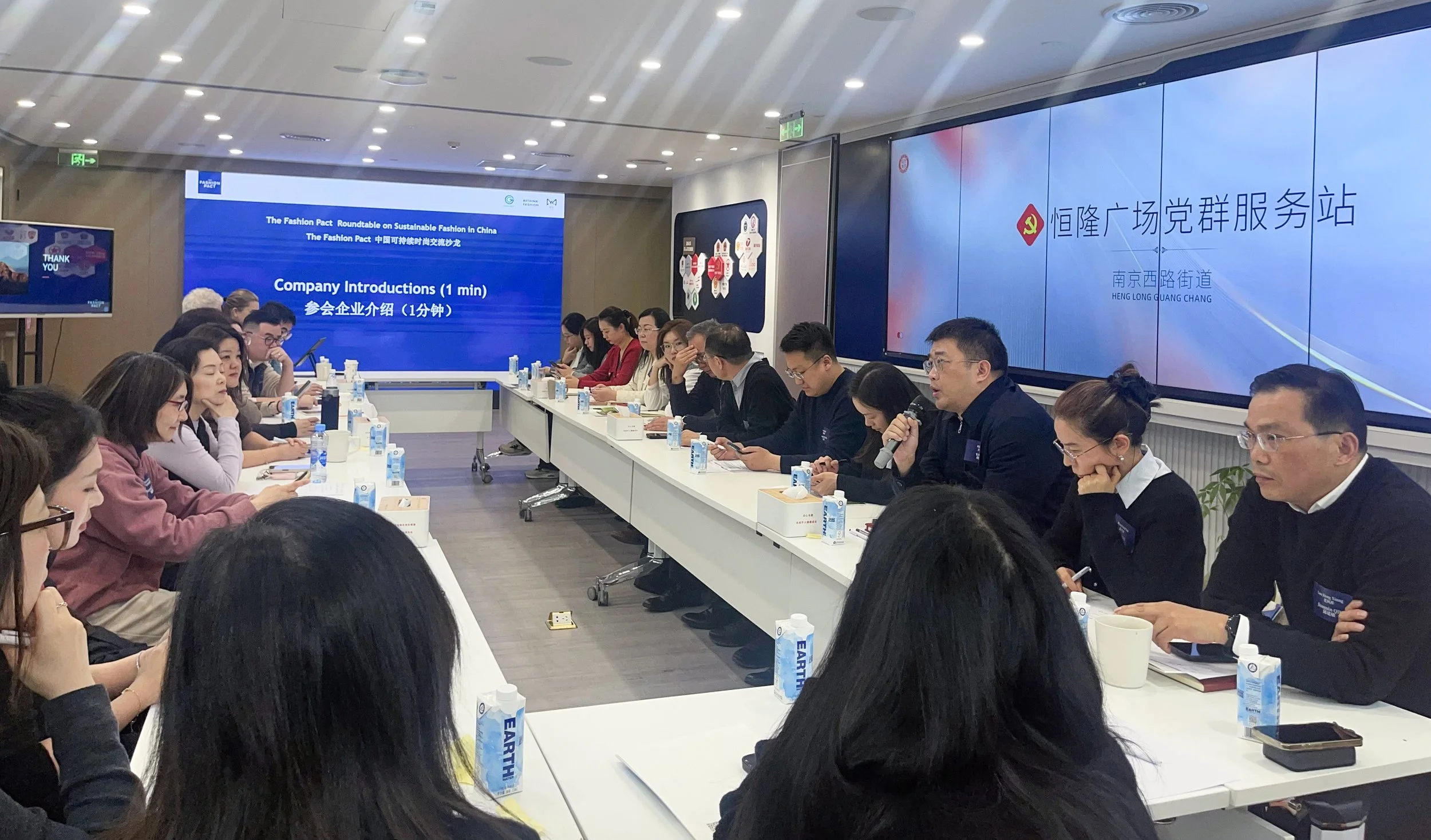
During the company introduction and roundtable session, participating enterprises openly shared their sustainability practices and the practical challenges they face. A recurring theme was the complexity of implementing effective decarbonization across upstream and downstream partners within the value chain. While circular economy models hold long-term strategic value, their commercial viability and scalability remain under active exploration. In addition, tightening international compliance requirements are placing growing pressure on cost structures and management systems. A key strategic question raised was how sustainable investments can be effectively translated into brand premium and tangible market recognition.
Participants broadly agreed that isolated efforts by individual companies are unlikely to deliver systemic breakthroughs. Instead, meaningful progress will depend on stronger industry collaboration and cross-sector mechanisms that can align standards, enhance data transparency, and facilitate more effective resource sharing. Only through collective action at scale can the industry accelerate its transition toward higher-quality and lower-carbon development. Companies also shared observations and practical experiences from market, cultural, and technological perspectives. Consumer education was highlighted as a critical component of the sustainability transition, particularly in helping the public better understand the cost structures and long-term value embedded in sustainable products.
In the context of global expansion, several speakers emphasized that Chinese brands “going global” should not be viewed simply as exporting products, but rather as a broader process of communicating culture, brand identity, and values to international audiences. The revitalization of long-established heritage brands was also discussed as an opportunity to connect cultural legacy with contemporary sustainable innovation.
From an operational perspective, technological innovation was widely seen as a key driver of transformation. Much of the sorting and disassembly work in textile and apparel recycling systems still relies heavily on manual labor, prompting discussions about how artificial intelligence and automation could significantly improve recycling efficiency and scalability. Emerging production technologies—such as waterless dyeing—were also highlighted as promising solutions to reduce the environmental footprint of textile manufacturing. Meanwhile, with the rapid advancement of AI and digitalization, more companies are exploring how data analytics and consumer insights can be integrated into production planning. Such approaches allow businesses to align manufacturing volumes more closely with real market demand while enabling faster responses through more accurate demand forecasting.
In her concluding remarks, Alvensleben once again underscored China’s central role in the global fashion ecosystem. She noted that approximately 59 percent of global fashion products are manufactured in China, while the country’s fashion sector employs around 20 million people. The scale, industrial capability, and innovation potential of China’s fashion industry make it an indispensable force in driving global sustainability transformation.
Alvensleben also stressed that many of the sustainability challenges facing the fashion industry—from climate action and material innovation to production transformation and value chain collaboration—are fundamentally global in nature. Companies across China, the United States, India, and other markets are confronting similar pressures and opportunities. This makes platforms for open and constructive dialogue—such as the Fashion Pact China Sustainability Salon—particularly important. By sharing experiences, exchanging perspectives, and jointly exploring solutions, industry stakeholders can accelerate meaningful progress.
GREENEXT: Bridging Global Initiatives and China’s Industrial Practice
As the organizer of the salon, GREENEXT continues to position itself as a cross-industry platform dedicated to advancing sustainable collaboration. The event also marked an important starting point for GREENEXT’s “Global Navigation” initiative, designed to support Chinese companies in navigating international compliance requirements and market access challenges, while strengthening supply chain credibility and global brand influence.
Against the backdrop of accelerating global low-carbon transition and systemic change, GREENEXT Expo 2026 will take place this October at the Shanghai Exhibition Center. Centered on the theme Low-Carbon Transformation x Tech Innovation x Business for Good, the Expo will serve as a collaborative platform integrating exhibition, dialogue, and co-creation—helping translate sustainability from conceptual alignment into actionable industrial practice.
More than a closed-door exchange, The Fashion Pact Roundtable on Sustainable Fashion in China sent a clear signal: China’s fashion industry is engaging with global sustainability transformation more proactively and openly. Looking ahead, GREENEXT will continue to work alongside international initiatives and industry partners to foster deeper, action-oriented collaboration—contributing to a more resilient, responsible, and future-ready fashion ecosystem.