H&M Foundation Launches Open‑Access Toolkit to Drive Coordinated Climate Action Across the Textile Industry
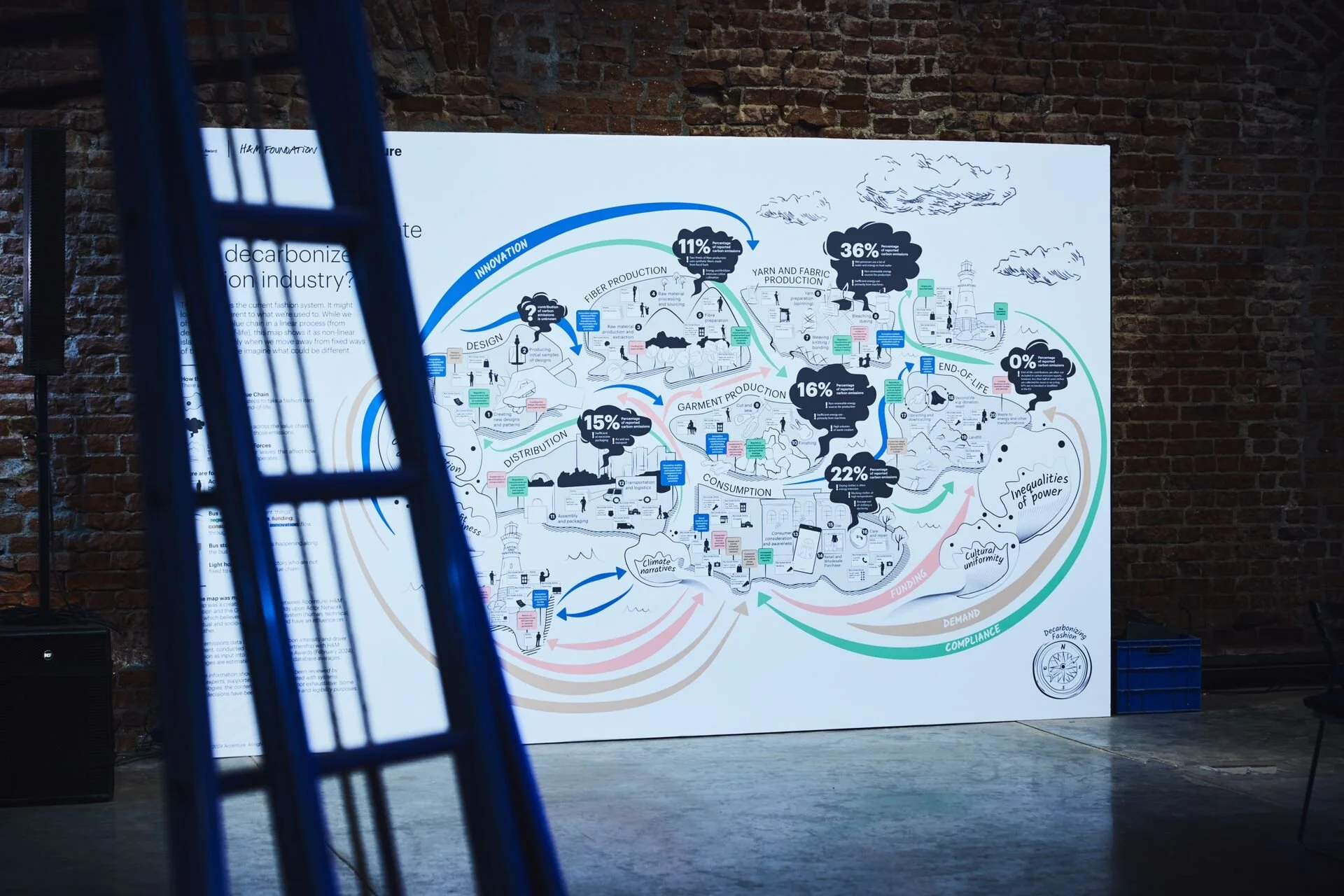
The H&M Foundation has launched a practical, open‑access workshop toolkit designed to help organisations across the textile value chain translate systemic insight into coordinated climate action. The toolkit builds on the System Map, a visual framework introduced in 2024 that reimagines the textile industry as an interconnected ecosystem shaped by flows of capital, incentives, innovation, regulation, and demand.
Thanks for reading The Sustainable Edit! Subscribe for free to receive new posts and support my work.
The textile sector must halve its greenhouse gas emissions every decade until 2050. According to the H&M Foundation, the barrier is not ambition but alignment. The System Map was created to provide a shared understanding of how emissions, power and value move through the industry. The new toolkit takes the next step: enabling brands, manufacturers, innovators, policymakers, investors and civil society organisations to apply that understanding within their own operations and partnerships.
The System Map challenges the traditional linear view of fashion by visualising the full textile value chain from fibre to end‑of‑life, indicative carbon emissions at each stage, and the systemic forces—such as profit‑centredness, power imbalances, and cultural norms—that shape decision‑making. By mapping actors, flows, and leverage points, it highlights where interventions can unlock system‑wide impact and where well‑intended actions may shift burdens elsewhere.
To help organisations put this into practice, the H&M Foundation partnered with Accenture to develop a facilitation toolkit that can be delivered digitally or in person. It includes a keynote introduction to the System Map and three structured workshops: identifying an organisation’s role and sphere of influence; pinpointing systemic leverage points; and reimagining a decarbonised, just future textile system.
A core principle of the toolkit is that decarbonisation must go hand in hand with a just transition. Climate action cannot shift costs onto the most vulnerable parts of the value chain. By providing a structured way to examine power dynamics and structural barriers, the toolkit supports more equitable and coordinated climate strategies.
The System Map remains publicly available as an open industry resource. With the launch of this toolkit, the H&M Foundation aims to move the conversation from understanding the system to actively reshaping it. Structural transformation, the organisation emphasises, will not come from isolated efforts but from more actors working from a shared view of the system—and choosing to redesign it together.