Ellen MacArthur Foundation Calls for Stronger Policy Frameworks to Advance Circular Bio-based Materials
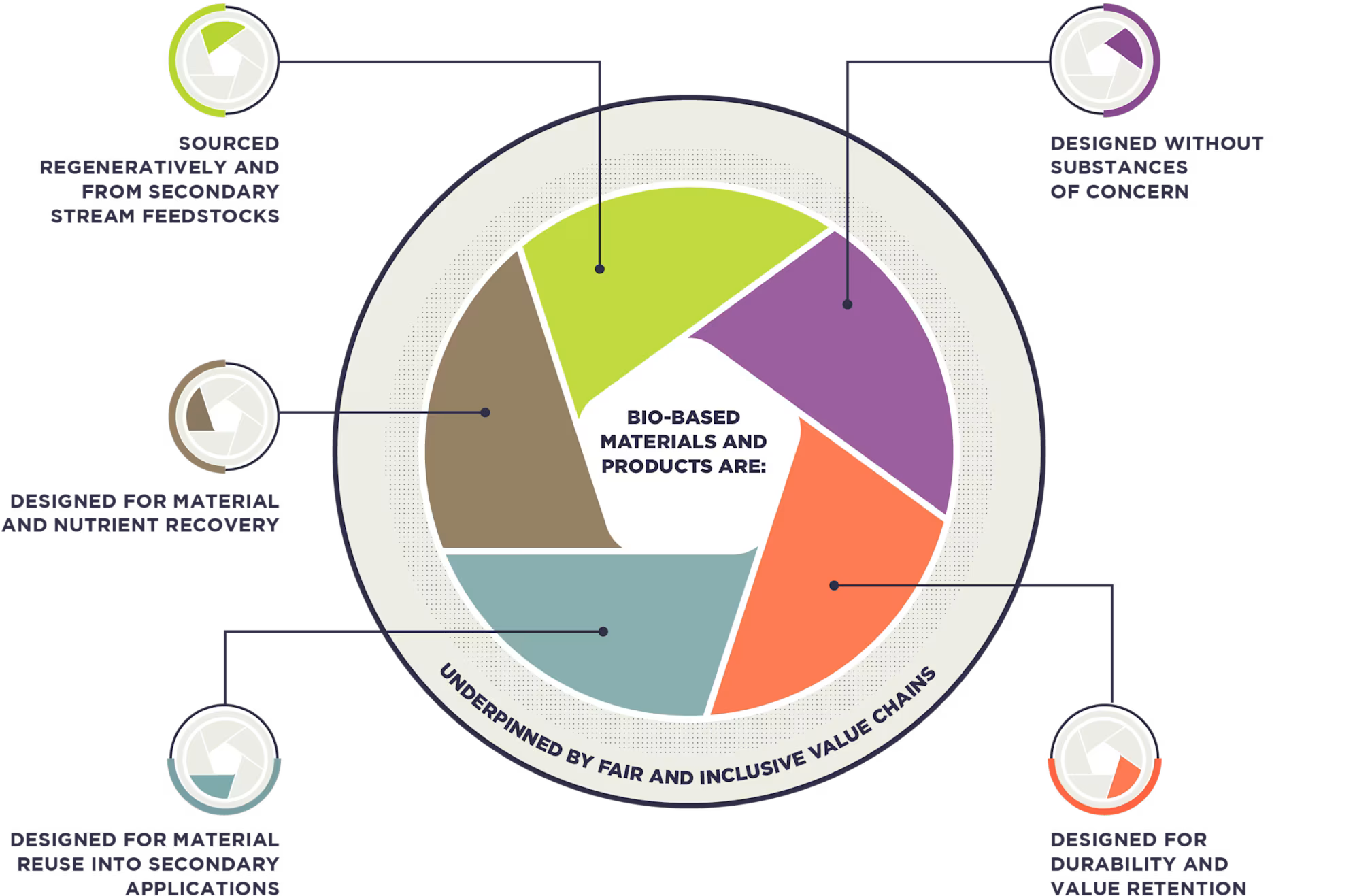
The Ellen MacArthur Foundation has published a new report calling for more comprehensive policy frameworks to unlock the full circular potential of bio-based materials. While more than 100 countries have introduced national circular economy roadmaps or action plans as of April 2026, the report finds that existing strategies largely treat bio-based materials as substitutes for finite resources rather than integrating them into regenerative, circular systems. An analysis of 13 national policy frameworks revealed limited consideration of critical issues such as land use, biodiversity, nutrient cycles and end-of-life management, despite the growing role of bio-based materials in sectors including fashion, packaging and consumer goods.
To address these gaps, the Foundation outlines a five-point policy agenda that includes embedding circular and regenerative design principles, enabling the circulation of higher-value materials, creating economic incentives for circular business models, investing in recycling and composting infrastructure, and strengthening collaboration across governments and industries. The report also emphasizes the importance of traceability, producer responsibility, and harmonized international standards to support global supply chains. Highlighting examples such as Gucci’s regenerative wool programme with Nativa and its Circular Hub initiative, the Foundation argues that coordinated policy and industry action can help shift bio-based materials away from today’s predominantly linear production models toward systems that restore ecosystems, retain material value and accelerate the transition to a regenerative circular economy.