Li-Ning releases 2025 ESG report, showcasing “green sports” innovation on the global stage
Chinese sportswear group Li-Ning has published its 2025 Environmental, Social and Governance (ESG) report, outlining progress across product innovation, green operations, supply chain management, and social impact. Marking over a decade of continuous ESG disclosure, the company is reinforcing its ambition to integrate sustainability into its core business strategy and to align commercial growth with environmental and social value.
In time for Earth Day, Li-Ning also announced a year-long public engagement programme in partnership with the China Green Foundation under its “Million Forest” initiative. The campaign links consumer participation in outdoor activities to tree-planting efforts in ecologically fragile regions of northwest China, aiming to connect sports lifestyles with tangible environmental action.
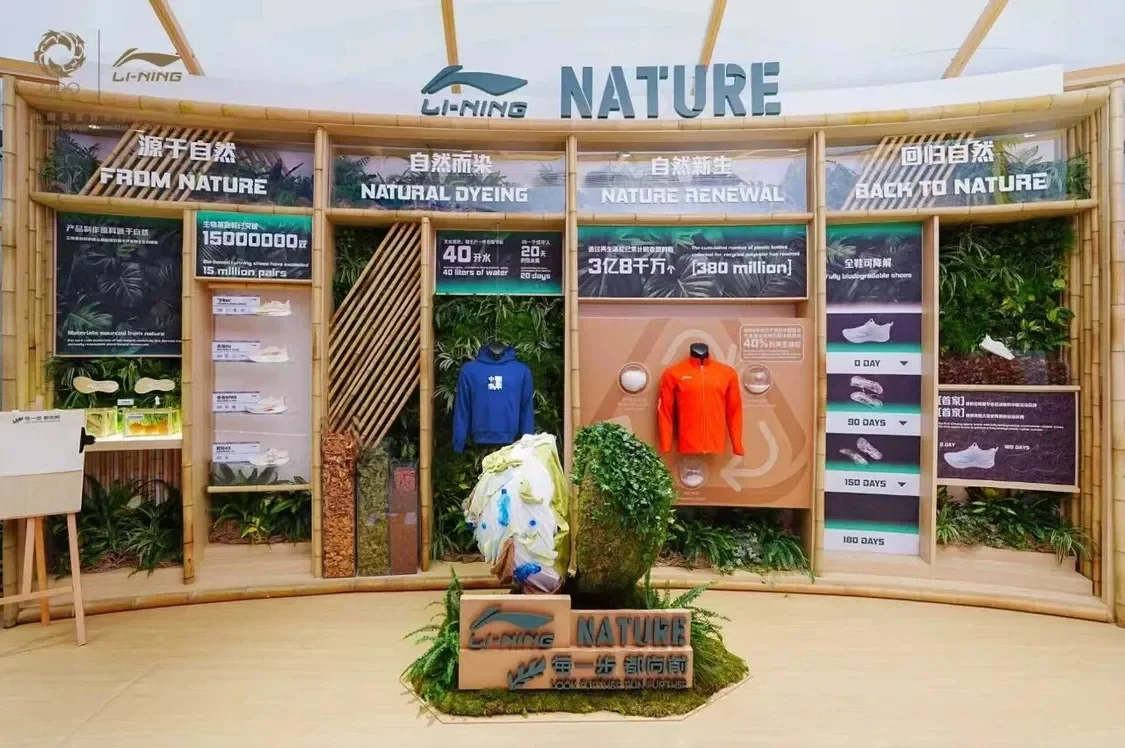
At the product level, Li-Ning highlighted advances in circular design and material innovation. As an official partner of the Chinese Olympic Committee, the company unveiled podium uniforms for the Milan Cortina 2026 Winter Olympics, incorporating approximately 45% recycled nylon and polyester. The garments reuse industrial waste yarn and plastic bottles, demonstrating how performance sportswear can integrate recycled inputs at scale. The collection was also featured at the “China House” pavilion during the Games, positioning sustainable design as part of China’s global brand narrative.
Li-Ning’s broader product strategy follows a full lifecycle approach—from bio-based raw materials and low-impact dyeing to recycling and biodegradability. The company has scaled plant-based materials derived from renewable sources such as castor oil, with more than 15 million pairs of running shoes now incorporating bio-based components. Its waterless dyeing technology reduces water consumption by up to 95% and eliminates salt usage, significantly lowering environmental impact per garment.
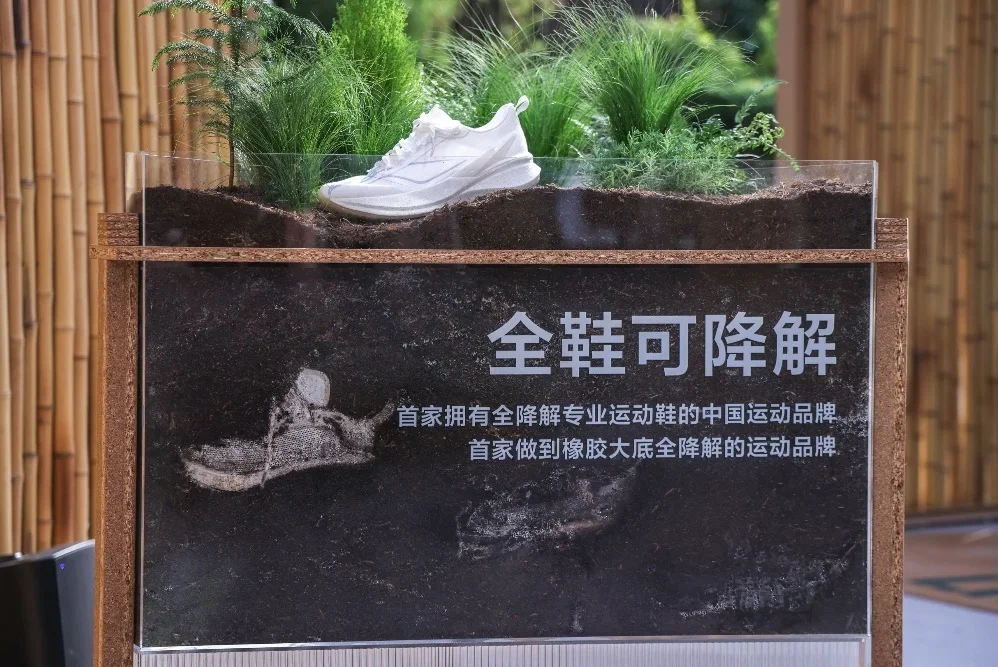
Progress in recycled materials has also accelerated. In 2025, Li-Ning used approximately 4,715 tonnes of recycled polyester yarn—nearly 30% of total polyester usage—while cumulatively enabling the recycling of around 380 million plastic bottles. In parallel, the company is advancing biodegradable performance footwear, achieving over 80% degradability in select professional shoe outsoles—an industry-first among Chinese sports brands.
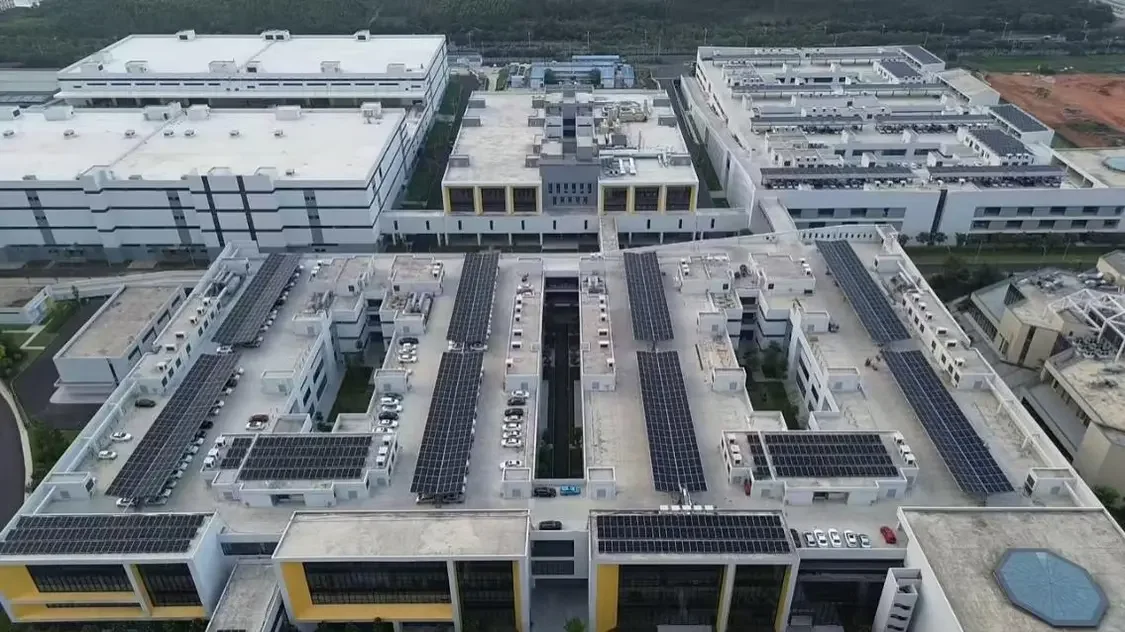
Beyond products, Li-Ning is leveraging digitalisation to improve operational efficiency. Energy-saving upgrades across facilities and retail stores, alongside expanded solar installations, are reducing emissions and increasing renewable energy use. Flagship sites in Nanning, Beijing, and Jingmen now integrate photovoltaic systems capable of covering a significant share of electricity demand, while select facilities have achieved international green building certifications.
The company is also strengthening responsible supply chain practices, conducting environmental and social audits across hundreds of suppliers, and advancing its commitment as a founding member of the ZDHC Foundation. By 2025, a growing number of suppliers had set carbon reduction targets aligned with the 2030 goals.
On the social front, Li-Ning continues to invest in employee wellbeing, talent development, and inclusive workplace practices, while expanding its philanthropic footprint. Initiatives span disaster relief, youth sports development in underserved regions, and adaptive sports programmes supporting people with disabilities—reflecting a broader effort to embed social value through sport.
As the company scales its sustainability agenda from product innovation to global visibility, Li-Ning’s latest ESG report signals a maturing approach—one that seeks to position “green sports” not only as a brand narrative, but as a replicable model for the wider industry.